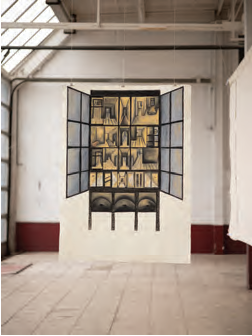
The project investigates the relationship between the vertical transparency of the Dutch ground-floor window in Katendrecht and the horizontal opacity of the gravestone in Oud Charlois and Zuiderbegraafplatz where many people from Katendrecht are buried. Through the lens of the gravestone and the window the urban social cultural capacity is investigated through binaries such as public/private, exhibitionism/voyeurism, social control/public control.
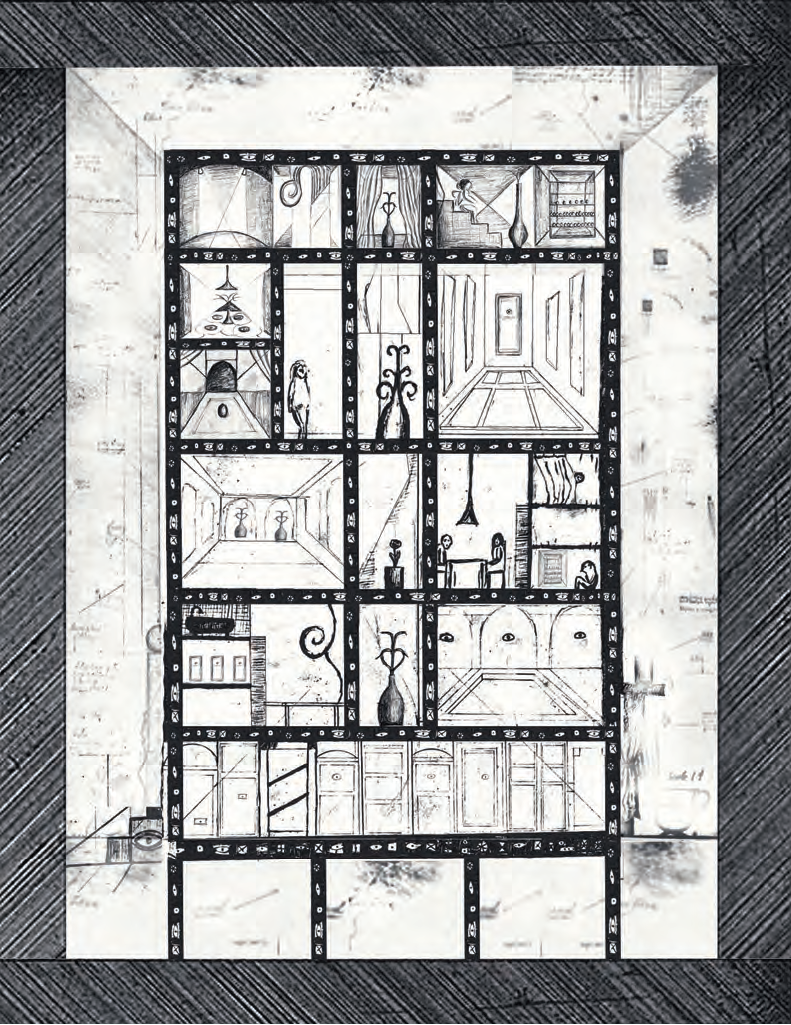
Opening up the diagram and adding a new dimension through the dollhouse – the lateral cut, expose hidden layers in between, revealing things that are normally unseen.
Both gravestone and the window can be seen as frames that encapsulate cultural values. The window frames the interior life of the living, revealing a curated domestic life. In contrast the gravestone frames the memory of the dead, presenting a horizontal narrative of identity and social status.
Both are comparable in size and measurements - one following the horizontal plane and one following the vertical plane which emphasizes their shared role in marking boundaries between life and death, public and private, memory and self expression.